
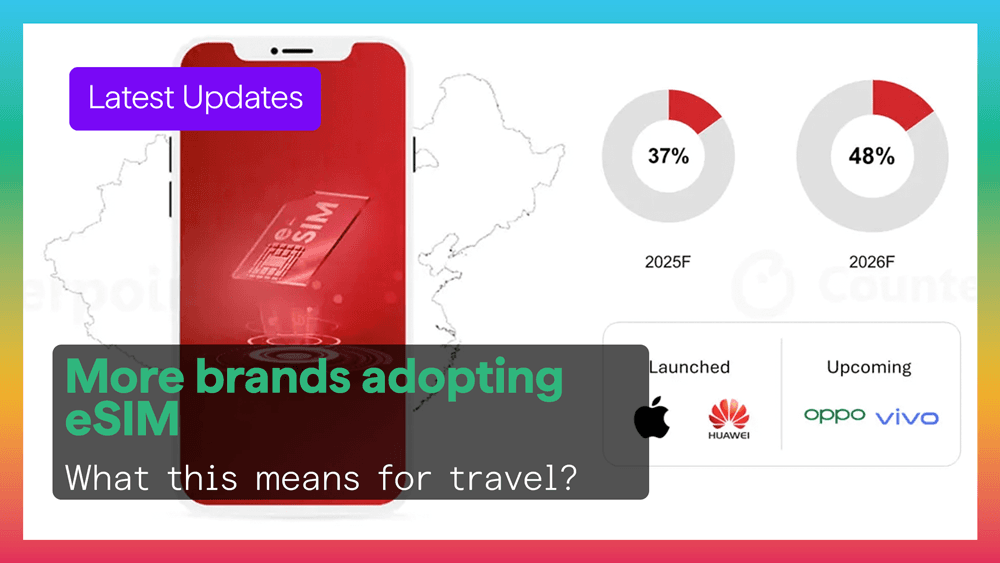
Smartphone brands are moving to eSIM-first designs
The shift from physical SIM cards to eSIM is accelerating across the smartphone industry. Major brands are now adopting eSIM-first or eSIM-only designs, following the direction set by newer iPhone models.
This change is not just about hardware. It is reshaping how people stay connected, especially when traveling.
For users, this means fewer physical limitations and a smoother, more flexible mobile experience.
Why more brands are adopting eSIM
Design and performance advantages
Removing the SIM tray gives manufacturers more internal space.
This allows for:
- Larger batteries
- Better cooling systems
- Slimmer device designs
- Improved durability
All of these improvements directly benefit travelers who rely heavily on their phones abroad.
Simpler global production
Creating one eSIM-ready device instead of multiple regional SIM variants makes production easier.
It also ensures devices work more seamlessly across different countries without compatibility issues.
Growing ecosystem support
More carriers and countries now support eSIM, making it a reliable option worldwide.
As support grows, eSIM is becoming the standard rather than an alternative.
What this means for travelers
Faster connectivity abroad
With an eSIM-ready phone, you can install your travel plan before departure.
Once you land:
- Turn on your travel line
- Connect instantly
- Start using apps without delay
No more SIM swapping
You no longer need:
- Physical SIM cards
- SIM eject tools
- Airport kiosks
Everything becomes digital and ready before your trip even starts.
More flexibility with dual lines
Modern phones allow you to:
- Keep your main number active
- Use a separate eSIM for data
- Switch between lines easily
This is ideal for travel, business, and everyday use.
How Figabytes fits into this shift
As smartphones move toward eSIM-first designs, services like Figabytes become even more relevant.
Figabytes is built around this new digital approach, offering:
- Simple plan selection
- Quick installation
- Reliable global coverage
- Clear pricing without confusion
The goal is to make travel connectivity as smooth as possible.
How to get your phone ready for travel
Before your trip
- Choose your destination plan
- Install your eSIM over Wi-Fi
- Keep your home line active for calls
After arrival
- Open settings
- Select your travel eSIM for data
- Enable data roaming if required
- Start using your connection immediately
Why this shift matters long term
The move toward eSIM-only devices signals a major industry change.
We are moving toward:
- Fully digital connectivity
- Fewer hardware limitations
- Smarter mobile management
- Seamless global usage
For travelers, this means less friction and more control.
Final thoughts
The transition to eSIM is not just a trend. It is becoming the new standard for mobile connectivity.
As more brands adopt eSIM-first designs, staying connected while traveling becomes simpler, faster, and more reliable.
If your next phone supports eSIM, pairing it with a travel-ready solution like Figabytes is one of the easiest ways to upgrade your travel experience.